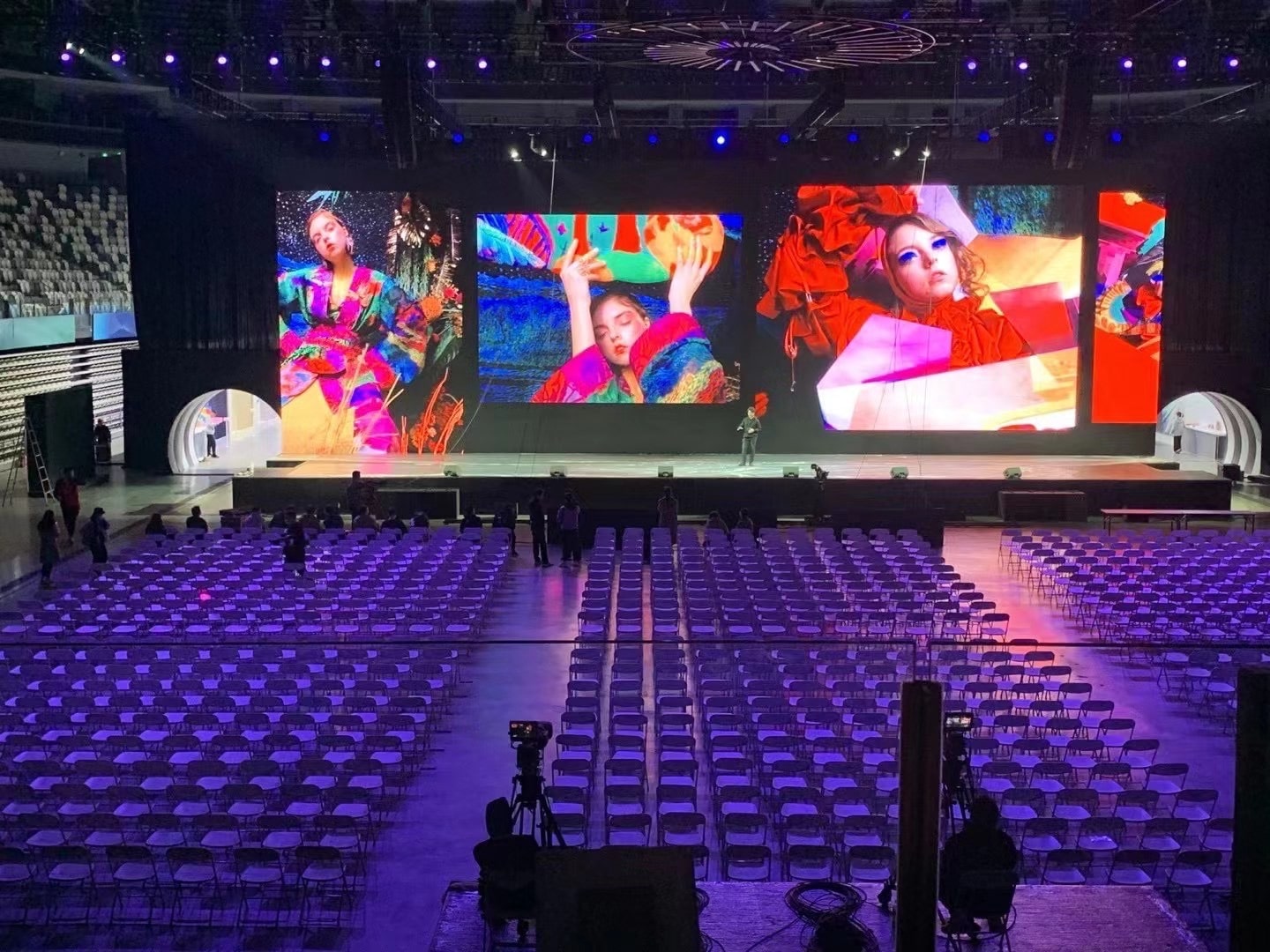
Outdoor events can have very different production requirements. A touring concert, sports event, festival, or architectural activation may use a similar type of LED display, but the operating conditions and installation requirements can vary significantly.
Choosing the right screen therefore requires more than comparing product specifications. The display should fit the event layout, production schedule, audience position, and site conditions.
This guide explains the main factors to consider when selecting an outdoor rental LED display for different event environments.

The event type determines the main requirements for the LED display. Concerts and touring stages often prioritize fast setup and lightweight cabinets, while daytime festivals require suitable brightness for outdoor visibility. Sports events may place greater emphasis on viewing distance and camera use, while architectural events may require a display that keeps the background visible.
| Event Environment | Main Consideration | Relevant Display Feature |
|---|---|---|
| Concerts and music festivals | Fast setup and outdoor visibility | Lightweight cabinets, quick assembly, high brightness |
| Corporate events and conferences | Clear presentation and graphics | Small pixel pitch and high refresh rate |
| Trade shows and exhibitions | Easy installation and flexible setup | Lightweight cabinets and modular design |
| Stage events | Fast installation and visual performance | Quick-lock system, high refresh rate and wide viewing angle |
The rental LED display range can be reviewed according to the event type and application requirements.
The physical layout also affects display selection. Screen position, audience distance, available installation space, and the required screen shape should be considered before choosing a specific configuration.
For stage applications, rental cabinets with fast connection systems can simplify repeated setup and dismantling. Curved installation can also be considered when the screen needs to follow a specific stage layout. The SL Series supports curved installation with adjustable angles from -15 to 15 degrees.
Brightness requirements depend on the environment in which the display operates. A screen used during a nighttime concert does not face the same conditions as one used under strong daytime light.
The outdoor SL models provide 3500 to 5500 nits brightness. Other outdoor display models cover higher brightness ranges for applications with more demanding daylight conditions.
Maximum brightness should not be the only selection criterion. Operating conditions, content, viewing distance, and brightness adjustment should also be considered.
Pixel pitch affects image detail and viewing distance. A smaller pixel pitch can provide more detail at closer distances, while a larger pixel pitch can be suitable when the audience is farther from the screen.
The SL outdoor range includes P3.91, P4.81, and P5.95. The selection should be based on screen dimensions, audience position, content requirements, and project budget rather than pixel pitch alone.
Refresh rate becomes particularly important when the LED display will be filmed or used for livestreaming and broadcast production.
The SL Series supports 1920 Hz and 3840 Hz refresh rates. Actual camera performance can also depend on shutter speed, camera settings, processing equipment, and signal configuration, so testing the complete system before the event is recommended.
IP rating should be evaluated according to the actual installation environment rather than treated as the only indicator of outdoor suitability. The outdoor SL rental models use IP67 protection, while the FX fixed outdoor series uses IP65.
Weather exposure, humidity, rain, temperature changes, and other site conditions should also be considered when confirming the appropriate display configuration.
The outdoor LED display range can be reviewed when comparing different outdoor display configurations and protection requirements.

Large outdoor LED screens can be exposed to significant wind forces. Screen dimensions, mounting height, support structure, installation method, and local weather conditions should be reviewed before installation.
For suspended or ground supported displays, qualified personnel should confirm the appropriate structural and rigging requirements. Cabinet weight alone should not be used to determine installation safety.
Installation efficiency is important for rental displays that are repeatedly transported and assembled. Cabinet weight, dimensions, connection systems, transportation requirements, and maintenance access should therefore be considered together.
The SL Series uses four fast locks per cabinet and supports one person installation and dismantling. Its outdoor models use rear maintenance, so the available space behind the screen should be considered when planning the mounting structure.
A transparent LED display can be useful when digital content needs to appear while the structure behind the screen remains visible.
This can apply to architectural facades, stadium applications, retail environments, and temporary events where a conventional opaque screen would block the background.
The TO Series provides up to 72% transparency, brightness up to 6500 nits, IP67 protection, and a 160 degree viewing angle. Its standard cabinet size is 500 × 1000 mm, with a die casting aluminum frame and 14 kg cabinet weight.
For projects where the surrounding architecture needs to remain visible, an outdoor transparent LED display can be considered instead of a conventional opaque rental screen.

Buyers may focus too heavily on brightness, pixel pitch, or cabinet price while overlooking how these specifications work together. The display should be evaluated based on the event environment, viewing distance, installation conditions, and intended use.
Display specifications alone do not determine whether a screen is suitable for an event. Wind exposure, mounting height, support structure, cable routing, viewing distance, and camera requirements should all be checked before installation.
Testing the complete display system before the event can also help identify potential issues.
A lower cabinet price does not necessarily result in a lower project cost. Transportation, installation, dismantling, maintenance, spare parts, power consumption, and technical support should also be considered when comparing quotations.
The outdoor SL Series is available in P3.91, P4.81, and P5.95. The appropriate choice depends on viewing distance, screen size, content requirements, and budget.
The outdoor SL models provide 3500 to 5500 nits brightness. Other outdoor display series provide higher brightness specifications for different outdoor applications.
Not necessarily. The required protection level depends on the product, installation environment, and expected weather exposure. The outdoor SL rental models use IP67, while the FX fixed outdoor series uses IP65.
Choosing an outdoor rental LED display starts with the event environment, viewing requirements, and installation conditions. Brightness, pixel pitch, protection level, cabinet design, refresh rate, and maintenance access can then be matched to the project.
For a project specific configuration, contact VisionLedPro with your screen size, viewing distance, event environment, and installation schedule.



 Tel: +86-134 2792 1400
 Email: led@visionledpro.com

Address: Second Industrial Park,No. 28, Xintang Road, Fuhai Street, Baoan District, Shenzhen,CHINA
Copyright © 2020 Shenzhen Vision Pro Electronic Co., Ltd All rights reserved.

By continuing to use the site you agree to our privacy policy Terms and Conditions.