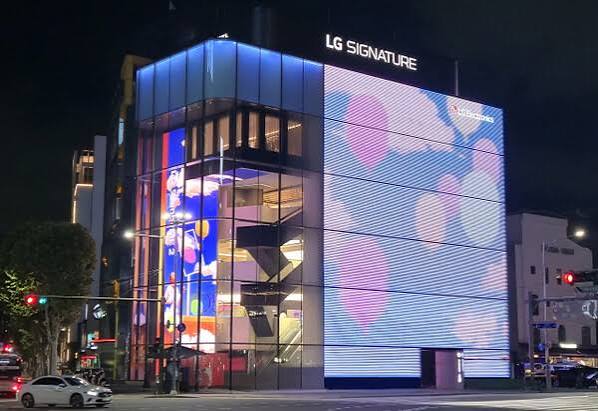
Storefronts and corporate headquarters face a common layout challenge when setting up modern visual displays. Standard billboards completely block window glass, shutting out natural sunlight and creating heavy visual obstacles inside the building.
Transparent LED displays solve this issue by turning glass facades into vibrant media screens while letting daylight pass through.
Finding a reliable factory partner determines whether your setup runs smoothly or runs into constant technical issues. This guide breaks down key parameters, structural choices, and practical vendor standards to help you choose the best screen partner for your project.

A transparent LED display is a digital signage solution designed to show visual content while maintaining visibility through the screen. Unlike traditional LED displays with solid back panels, it uses an open structure with narrow LED strips and spaced components. This design allows natural light to pass through the display, making it suitable for glass walls, retail windows, building facades, and other locations where visibility behind the screen remains important.
Transparent LED displays use hollow aluminum strips instead of solid metal backings. Self-emitting LED beads mount directly onto narrow circuit strips, allowing light, air, and heat to pass through freely. The gaps between pixel rows create the transparent effect while enabling the screen to display bright visual content.
Each LED pixel emits light independently to create colors, images, text, and video content. The open space between the LED strips allows viewers to see through the display while the illuminated pixels remain visible from the intended viewing distance.
Transparency, pixel density, and image quality must be balanced during product selection. Larger gaps between LED components increase the amount of natural light passing through the screen, while smaller pixel spacing can improve image detail and viewing quality.
Because much of the display structure consists of open space, the screen also appears lightweight when viewed from a distance. The overall assembly uses light components, with an ultra-thin circuit board around 10 mm thick and a total weight of roughly 12 kg per square meter. This structure can be installed on window frames and glass surfaces without requiring major structural modifications.
Transparent LED displays generate images through individually controlled LED pixels. Each LED emits light independently, and the display control system adjusts the brightness and color of these pixels to reproduce images, videos, text, and other visual content.
The open structure does not block the entire installation surface. Instead, the physical spacing between LED strips allows light to pass through the screen, creating the transparent visual effect.
A higher transparency rate usually requires more open space between LED components. However, greater spacing can reduce pixel density and affect image detail at close viewing distances. A denser LED configuration can improve resolution but may reduce the overall transparency rate.
For this reason, manufacturers select different pixel configurations according to viewing distance, ambient light conditions, installation height, and application requirements.
Evaluating prospective screen suppliers requires looking past simple promotional sheets. To ensure long term display stability and low maintenance costs, buyers should assess factory capabilities across five fundamental technical areas.
Pixel density directly dictates image clarity and light transmission rates. Fine pixel spacing like P2.5 to P3.9 yields sharp detail for close indoor viewing, while wider spacing like P6.25 to P10.4 keeps transparency above 85% for high rise glass facades.
Thermal management is crucial because heat causes early LED bead failure. Open aluminum frames shed heat naturally through regular air flow, protecting driver chips without noisy cooling fans.
Raw material selection matters immensely for long term performance. Leading engineering manufacturers like VisionLedPro demonstrate how precision manufacturing elevates display longevity.
By manufacturing in controlled dust free SMT cleanrooms and using automated screw assembly, their factory processes secure uniform panel flatness and prevent microscopic dust from causing dead pixels.
Utilizing Tier 1 encapsulation brands like Nationstar paired with stainless steel screws stops early color shifts, rust, or signal drops over extended daily operation.
Custom architectural layouts rarely work with standard off the shelf square panels. Experienced manufacturing partners supply custom curved, right angle, or circular modules engineered to match complex architectural glass frames seamlessly.
Commercial buildings require strict electrical and structural safety compliance. Verified CE, FCC, or RoHS factory credentials confirm that display hardware meets global safety regulations, electromagnetic standards, or environmental codes.
With these core selection standards established, we can examine the main series options or manufacturing standards operating in the market today.

The global supply chain features specialized engineering factories alongside standard assembly plants. Matching your site requirements with a vendor capable of true component level quality control keeps project timelines on track.
Manufacturing excellence starts in a cleanroom environment. Operating dust free SMT workshops prevents microscopic dust from creating dead pixels or early panel breakdown. In addition, using automatic screw assembly machines ensures uniform module tension, eliminating dark visual seams across large video walls.
Standard high volume suppliers usually stick to fixed cabinet dimensions, whereas direct engineering manufacturers tailor every frame to your building drawings. Exploring specialized lines like the Holographic LED Screen gives you direct access to ultra thin, frameless 3D visual setups that merge seamlessly into luxury retail glass.
For heavy outdoor weather or large venues, advanced suppliers offer dedicated series options:
| Product Series | Model Code | Pixel Pitch | Pixel Density | Peak Brightness | Transparency Rate |
| HG Holographic Series | HG 2 | P2.5 | 160000 dot/sqm | 1200 nits | 70% |
| HG Holographic Series | HG 3 | P3.91 | 65536 dot/sqm | 4000 nits | 80% |
| HG Holographic Series | HG 6 | P6.25 | 25600 dot/sqm | 5000 nits | 85% |
| TO Outdoor Series | Outdoor TO | Custom Pitch | High Density | Up to 6500 nits | 60% to 75% |
| TZ Video Wall Series | Indoor TZ | Modular Pitch | Flexible Grid | 1500 to 4000 nits | 75% to 85% |
| TC Glass Wall Series | Architectural TC | Integrated Frame | Custom Setup | 2000 to 5000 nits | 80% to 90% |
Choosing direct factory specialists at VisionLedPro provides complete access to custom frame geometry, internal cable routing, and dedicated engineering support.
Once you know what manufacturing standards to look for, the next step is identifying where these screens create the most commercial value.
Understanding the underlying technology helps you choose the right balance of brightness, resolution, and transparency for your venue.
Standard Front Lit Screens: Utilize traditional SMD LEDs mounted on robust frames to provide extreme structural integrity for large building facades with 60% to 75% transparency.
High Efficiency Side Lit Screens: Mount LEDs along the edges of linear PCB strips to achieve up to 85% transparency and high brightness designed to fight direct daylight in luxury stores. Deploying specialized retail signage ensures vivid ad content without hiding indoor inventory.
Premium 3D Holographic Displays: Feature an ultra thin substrate reaching 90% to 95% transparency to produce glasses free 3D visual effects in high end showrooms.
Beyond outdoor street fronts, indoor venues and corporate environments benefit greatly from light transparent display frames.
Commercial Real Estate: Large glass curtain walls turn building exteriors into high impact advertising space while keeping interior offices bright with natural light.
Events and Exhibitions: Touring crews use lightweight hanging cabinets to build deep, multi layer stage backgrounds that disassemble rapidly between event stops.
Corporate Lobbies: Tech companies install transparent video walls in entryways to present company updates without creating dark visual barriers.
Knowing where to place your displays leads directly into managing the hidden engineering risks that can pop up during procurement.
Buying errors usually happen when teams look only at initial hardware prices rather than long term running costs. Misreading technical specs leads to unexpected structural and maintenance expenses later.
Exaggerated Brightness Claims: Pushing low grade LEDs past safe power limits creates brief high brightness but causes rapid color fading and dead lamps within months.
Power Efficiency Limits: Inefficient power units waste electricity, generate excess heat, and shorten overall component lifespan.
Window glass installs present tight access constraints that affect everyday repair work.
Maintenance Path: Screens set behind window glass need front module access to avoid costly scaffolding setups during basic repairs.
Load Calculations: Incorrect weight estimates can strain window mullions, forcing costly late stage structural fixes.
After mapping out these operational risks, you can follow a clear step by step plan to complete your project.
A smooth installation relies on tight coordination between site managers, structural teams, and the screen factory. Working through a clear plan prevents costly delays.
Lighting Assessment: Check direct sun exposure to choose between indoor brightness levels or high outdoor brightness up to 6500 nits.
Structural Review: Confirm that existing window mullions or ceiling trusses can safely carry 12kg per square meter screen weight.
Once site checks pass, physical mounting and signal wiring proceed through four straightforward steps:
Secure Beams and Bases: Secure the hanging beam and floor base to the screen frame.
Hoist Top Row: Use steel cables to hoist the top row of the screen, fixing it securely to the ceiling structure overhead.
Connect Screen Panels: Connect the adjacent screen modules together using connection screws.
Wiring and System Setup: Complete the power and signal cable connections, set up wireless or cloud management controls, and run a comprehensive factory aging test to verify display stability.
Because the system utilizes a modular design composed of LED modules, power supplies, and receiver cards, repairs are quick, cost-effective, and do not require replacing the entire screen:
Module Replacement: Swapping individual LED modules easily resolves black patches, unlit rows/columns, or color/brightness distortions.
Power Supply Replacement: Solves screen flickering or random reboots.
Receiver Card Replacement: Resolves completely dark screens or display glitches/scrambled images.
Overall cost depends on pixel density, total screen area, peak brightness requirements, and custom framework. Finer pixel pitch and high brightness LEDs raise initial material costs, while custom curved frames require extra engineering time. For accurate project details and custom pricing, reach out to our technical team directly.
A commercial screen built with quality Nationstar LED chips delivers an operational lifespan of 100000 hours under regular working conditions. Running the display at sensible brightness settings and keeping power supplies well ventilated extends overall component life significantly.
Yes, modern window displays use dual access engineering. Technicians can swap individual LED strips or power boxes directly from the front using specialized removal tools, removing the need to take down the main frame or squeeze into tight rear gaps.
Standard screen setups usually ship within two to three weeks. Custom jobs requiring specialized frame dimensions, curved cabinets, or unique mounting brackets take four to six weeks for design, factory assembly, and full testing.
Selecting the right transparent LED screen comes down to balancing clear visual quality, low frame weight, and simple ongoing maintenance. Partnering with a dedicated manufacturer ensures you get solid hardware built with quality components that run reliably day in and day out.
Ready to upgrade your glass facade with high impact video content? Explore screen options on the VisionLedPro website or contact our engineering specialists directly to start planning your setup.



 Tel: +86-134 2792 1400
 Email: led@visionledpro.com

Address: Second Industrial Park,No. 28, Xintang Road, Fuhai Street, Baoan District, Shenzhen,CHINA
Copyright © 2020 Shenzhen Vision Pro Electronic Co., Ltd All rights reserved.

By continuing to use the site you agree to our privacy policy Terms and Conditions.