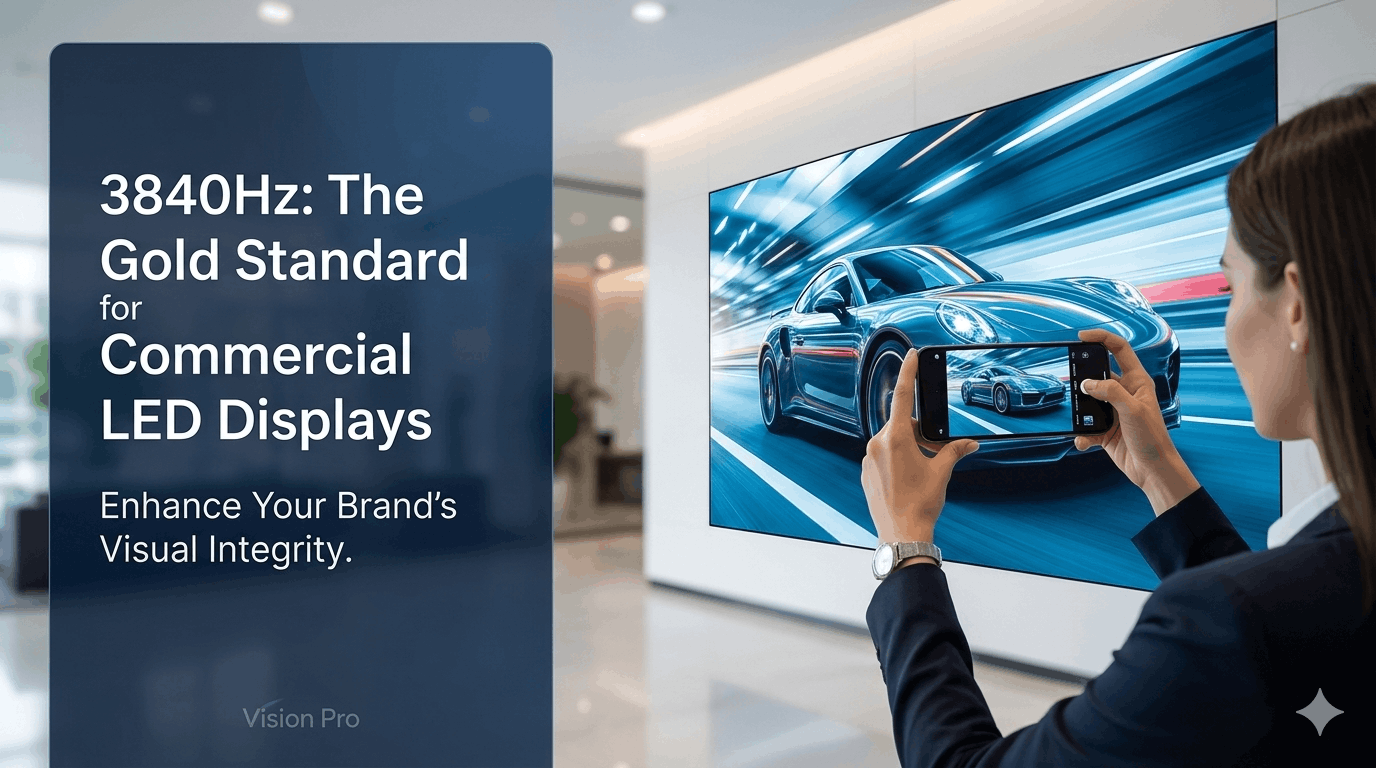
The short answer is visual integrity. A 3840Hz refresh rate ensures your LED display remains flicker-free, even when captured by high-end cameras or modern smartphones. For commercial projects, this technology is the difference between a premium brand image and a distorted, unprofessional digital presence.
Refresh rate refers to the number of times per second an LED display updates its image data. It is measured in Hertz (Hz).
In the commercial world, you will typically encounter two standards: 1920Hz (Common) and 3840Hz (High Refresh). While the human eye struggles to see the difference in a static environment, the "camera test" reveals the truth instantly. For mission-critical applications, our Small Pixel Pitch LED Display series utilizes the 3840Hz standard to ensure ultra-high-definition clarity without distortion.
A low refresh rate causes visible black horizontal lines—known as scanning lines—to appear in photos and videos of the screen. In an era where customers constantly share their experiences on social media, a 1920Hz screen can make your expensive advertisement look broken or cheap on a mobile device.

High refresh rate technology is no longer a luxury; it is a baseline requirement for high-traffic commercial spaces.
When a screen refreshes at 3840Hz, the transition between frames is so rapid that digital sensors cannot detect the reset. This creates a perfectly stable image for Instagram reels, TikToks, and professional TV broadcasts. This is why our Rental LED Display solutions are the top choice for event organizers who prioritize social media impact and professional filming.
Commercial content often features fast-moving graphics, such as a pouring beverage or a speeding car. A 3840Hz rate eliminates "ghosting" or motion blur, ensuring that every frame of your high-definition video remains sharp and impactful.
For indoor applications like retail stores or corporate lobbies, flicker—even when invisible—can cause headaches and eye fatigue over time. 3840Hz provides a "softer" visual experience, encouraging customers to stay longer and engage more with your content.
Yes. The quality of your display directly correlates to the perceived value of your brand.
If you are a luxury retailer or a car dealership, a flickering screen sends a message of low quality. By investing in 3840Hz technology, you protect your brand’s "digital footprint." When influencers or news outlets film your location, your message remains clear and professional.
Furthermore, screens with 3840Hz capabilities typically utilize higher-quality Driver ICs. These components often offer better grayscale performance, meaning your colors look more vibrant and your blacks look deeper, even at low brightness levels.
While both standards are common in the market, their performance in real-world commercial scenarios differs significantly.
| Feature | 1920Hz (Standard Refresh) | 3840Hz (High Refresh Rate) |
| Visual Stability | Good for the naked eye. | Superior; perfectly stable for eyes and cameras. |
| Smartphone Filming | May show black scanning lines or flickering. | Flicker-free; perfect for social media sharing. |
| Professional Broadcasting | Potential ghosting in high-speed video. | Smooth, broadcast-quality motion. |
| Grayscale Performance | Standard; colors may wash out at low brightness. | High; maintains deep colors and rich detail. |
| Best Used For | Basic indoor signage or static information boards. | High-end retail, TV studios, XR stages, and outdoor ads. |
| Brand Perception | Average. | Premium and professional. |
If your project involves public visibility, social media interaction, or professional broadcasting, 3840Hz is mandatory. It prevents scanning lines, improves motion clarity, and secures your brand’s reputation in the digital age. In the long run, the cost of a "flickering" screen is far higher than the initial investment in quality.
Looking for a Quote? Contact us now and Get a price estimate for your 3840Hz LED project.



 Tel: +86-134 2792 1400
 Email: led@visionledpro.com

Address: Second Industrial Park,No. 28, Xintang Road, Fuhai Street, Baoan District, Shenzhen,CHINA
Copyright © 2020 Shenzhen Vision Pro Electronic Co., Ltd All rights reserved.

By continuing to use the site you agree to our privacy policy Terms and Conditions.