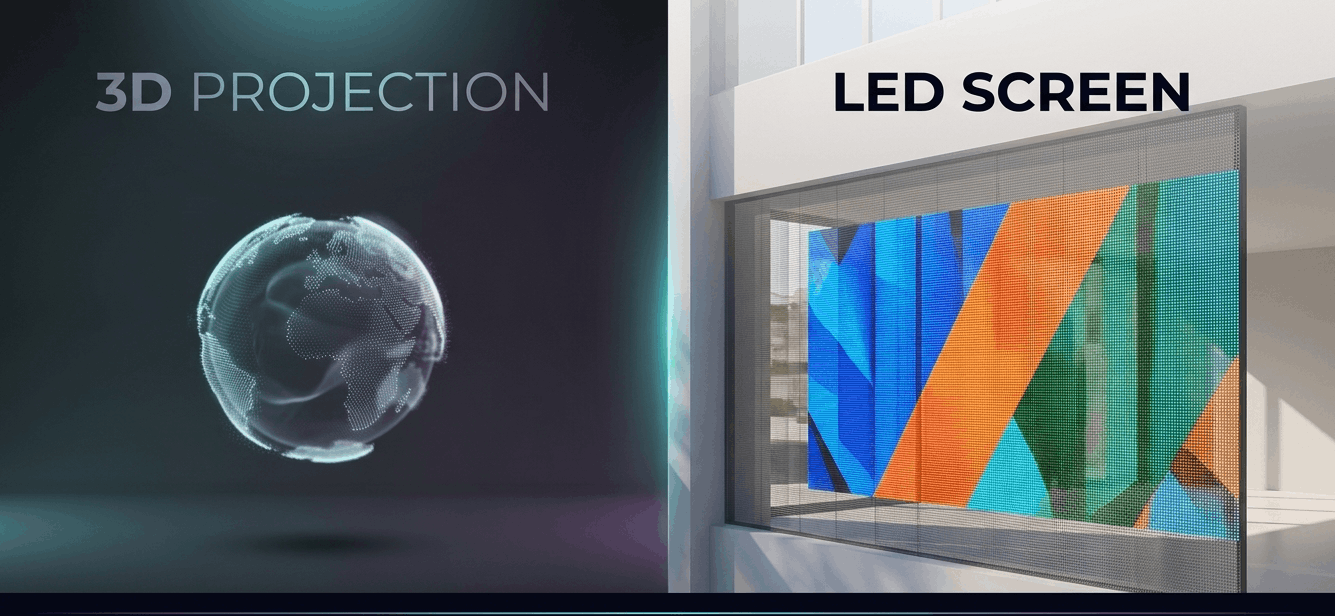
Choose Transparent LED screens for high-brightness commercial settings like retail windows and building facades. Select Holographic 3D projection for controlled, dark environments such as stage performances and high-end museum exhibits. Transparent LED offers superior durability and brightness, while Holographic projection provides a more ethereal, ghost-like visual depth.
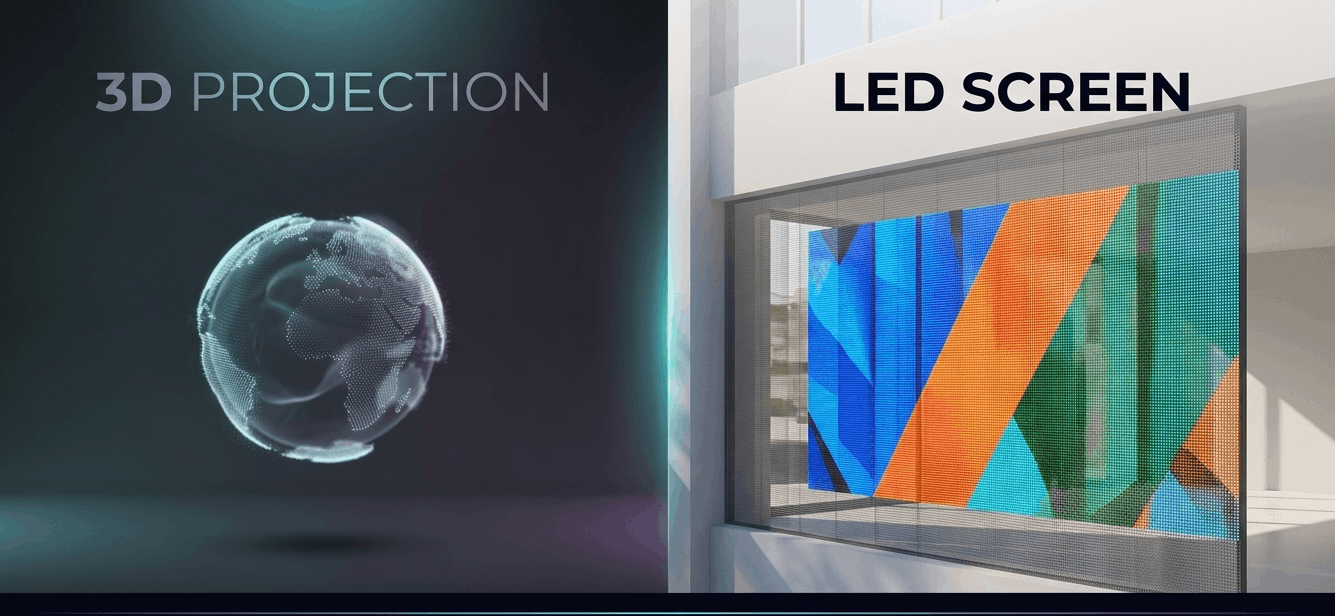
Holographic 3D projection is a technology that creates three-dimensional images floating in space. It uses light interference and diffraction to reproduce the visual field of an object. This allows viewers to see depth without wearing special glasses.
True holography functions by recording light patterns directly into a medium. Most commercial applications use a method called "Pseudo-holography" or Pepper's Ghost. This involves reflecting a high-brightness light source off a specialized transparent film.
The film is usually placed at a 45-degree angle. It reflects the image from a hidden projector or LED screen while allowing the background to remain visible. This creates the illusion of a solid object existing in thin air.
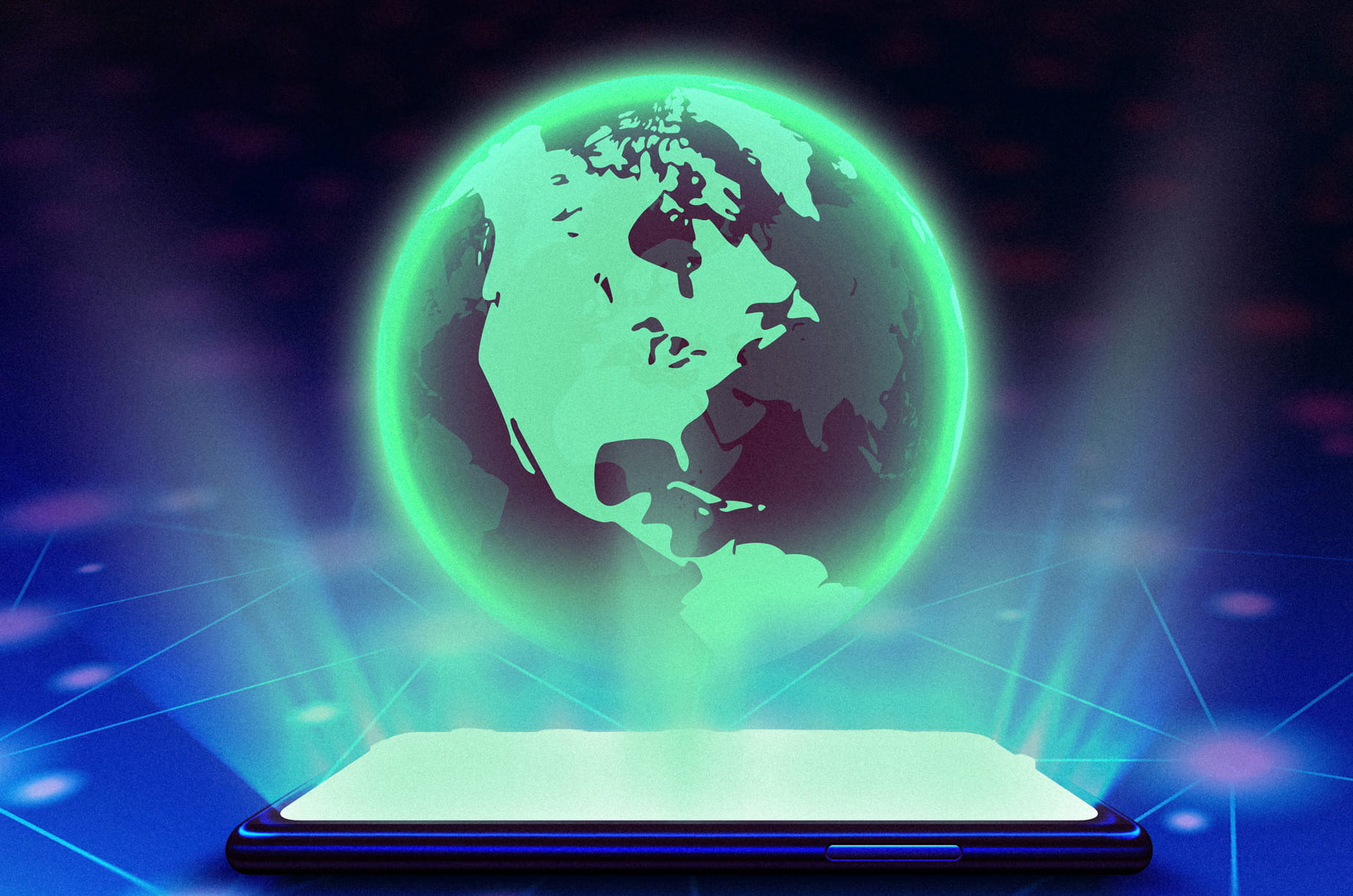
Holographic projection creates a mesmerizing, immersive experience for the audience. It allows for a completely "frameless" look where objects appear magically disconnected from any hardware. It is ideal for storytelling and luxury branding.
This technology is extremely sensitive to ambient light. It requires a dark or highly controlled environment to maintain image clarity. Installation is complex because it requires precise alignment between the light source and the reflection film.
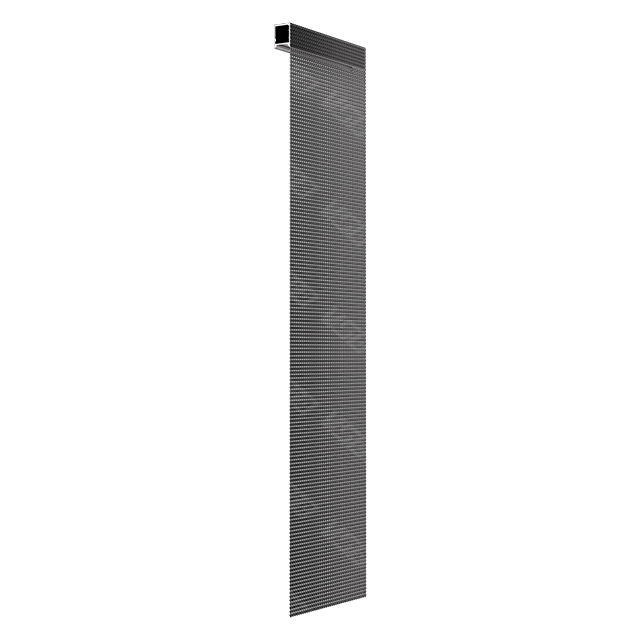
A Transparent LED screen is a specialized display made of slim LED strips. It features a hollow design that allows up to 90 percent of light to pass through. It functions similarly to a standard LED screen but without the solid backplate.
The screen uses tiny SMD LEDs mounted on a transparent grid or glass surface. Each LED strip is vertically aligned to maximize transparency. The control system manages the pixels to show vibrant images while keeping the background visible.
A high-end version of this technology is the Holographic LED display. It combines high transparency with specialized 3D content to create a naked-eye 3D effect. In this application, the screen becomes a bridge between 2D display and 3D holographic depth.
Transparent LED screens offer incredible brightness that works even in direct sunlight. They are highly durable and can be integrated directly into building glass or retail windows. Maintenance is simple because individual strips can be replaced.
These screens have a fixed pixel pitch which limits the resolution compared to high-end projectors. While they are transparent, the thin horizontal or vertical lines of the grid are visible upon very close inspection. They require a physical frame for support.
| Feature | Holographic 3D Projection | Transparent LED Screen |
|---|---|---|
| Best Environment | Dark or Controlled Indoor | Bright Indoor or Outdoor |
| Transparency | High but Ethereal | High and Structural |
| Brightness | Low to Medium | High up to 5000 nits |
| Installation | Complex and Fragile | Fast and Integrated |
| Durability | Low Service Life | Long Service Life |
| Visual Depth | 3D Ghost Effect | Floating 2D or 3D Effect |
Both technologies serve different professional needs. Holographic projection wins on artistic mystery and stage magic. Transparent LED wins on commercial reliability and daylight performance.
VisionLedPro provides high-performance transparent displays for global projects. We help engineers and designers find the right visual solution for every environment.Contact our technical team today to receive a free project consultation.
A: Yes, they can display naked-eye 3D content by using specialized video production techniques. The floating nature of the screen enhances the 3D illusion for viewers.
A: The initial hardware for projection is often cheaper. However, the total cost of high-end film and custom content creation usually makes Holography more expensive in the long run.
A: It blocks between 10 and 30 percent of the view depending on the pixel pitch. From a distance of three meters, the screen becomes almost invisible to the eye.
A: Transparent LED screens are significantly more durable. They are rated for over 100,000 hours of use. Projector bulbs and holographic films degrade much faster.
A: Many modern stages use Transparent LED as a background or foreground layer. It provides more light and better interaction for the performers than traditional projection.



 Tel: +86-134 2792 1400
 Email: led@visionledpro.com

Address: Second Industrial Park,No. 28, Xintang Road, Fuhai Street, Baoan District, Shenzhen,CHINA
Copyright © 2020 Shenzhen Vision Pro Electronic Co., Ltd All rights reserved.

By continuing to use the site you agree to our privacy policy Terms and Conditions.