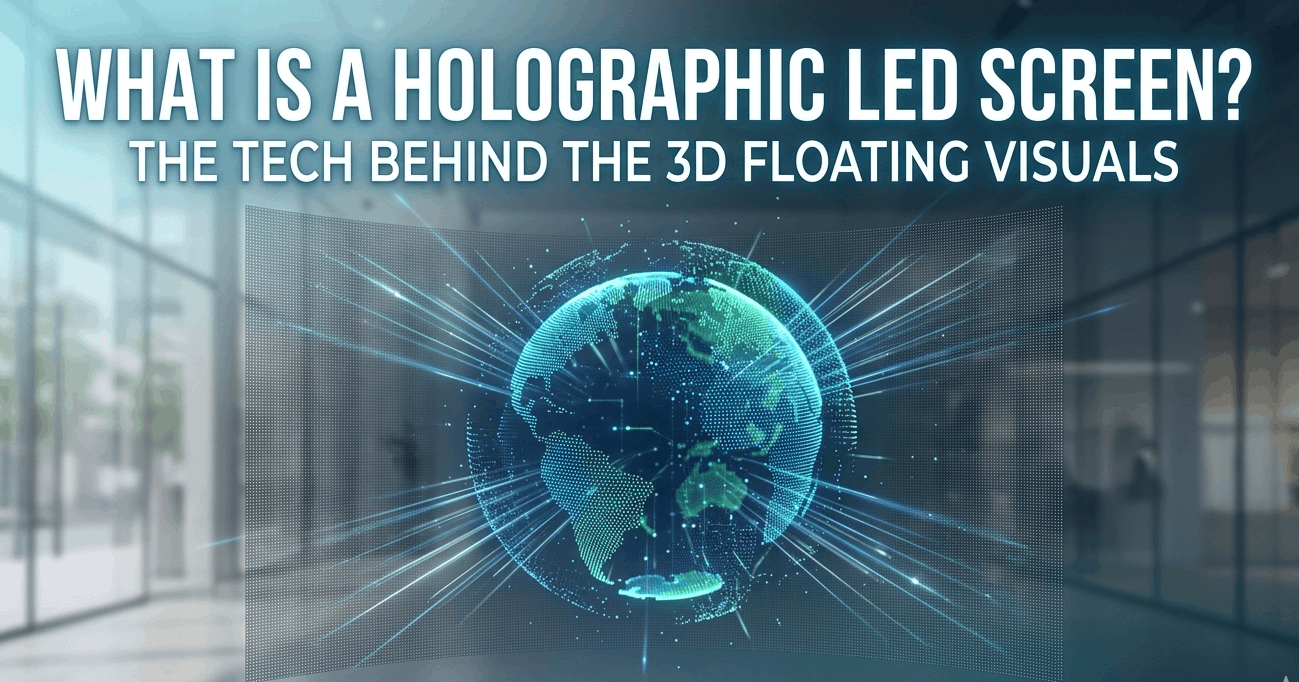
A Holographic LED screen is a high-transparency display designed to produce three-dimensional visuals that appear to float in mid-air. Unlike standard screens, it uses a hollow-structure design to achieve over 80 percent transparency. This allows light to pass through the display, blending digital 3D content seamlessly with the physical background.
The magic starts with micro-SMD technology. Tiny LEDs are mounted on ultra-slim individual strips. These strips are aligned vertically to minimize visual obstruction from the structural frame.
High-end Holographic LED screens often utilize side-emitting technology. This increases the viewing angle and ensures the light does not "bleed" into the transparent areas. The result is a crisp image that maintains its floating effect from multiple sides.
The driver ICs are hidden within the slim support ribs. This ensures that when the screen is off, it looks like a simple sheet of glass. When turned on, the high refresh rate of 3840Hz ensures the 3D visuals remain stable and flicker-free for cameras.
Software is the soul of the Holographic LED screen. The 3D effect relies on the "Black-out Principle." Since black pixels emit no light on an LED screen, they become completely transparent.
Content creators design 3D assets against a pure black background. When played, the viewer only sees the illuminated 3D object. Because the human eye can see the physical space behind the screen, the object appears to occupy real 3D volume.
Perspective and shadow are carefully rendered to match the screen's specific pixel pitch. This deepens the illusion of depth. It transforms a flat display into a digital portal that captures the attention of every passerby.
Traditional 3D displays, such as outdoor naked-eye 3D billboards, rely on a solid, opaque background. They use "forced perspective" to create an illusion of depth that only works from one specific "sweet spot." If a viewer moves too far to the side, the 3D effect collapses and looks distorted.
A Holographic LED screen offers a more natural depth perception. Because the screen is transparent, the 3D object is physically layered over the real environment behind it. This creates a true spatial relationship between the digital content and the physical world, which is visible from much wider angles.
Standard 3D displays block all natural light and views. They turn a window into a solid wall. Holographic LED screens maintain the functionality of the glass. They allow sunlight to enter the building while simultaneously displaying high-impact 3D visuals.
| Feature | Traditional 3D LED Display | Holographic LED Screen |
|---|---|---|
| Background | Solid and Opaque | Transparent and Hollow |
| 3D Principle | Forced Perspective (Anamorphic) | Spatial Layering + Black-out |
| Viewing Angle | Limited "Sweet Spot" | Wide Viewing Angle |
| Light Passage | Blocks 100% of Light | Allows 70% to 90% Light |
| Structure | Heavy and Thick | Ultra-slim and Lightweight |
| Main Use | Outdoor Massive Billboards | Retail Windows, Interior Design |
Luxury retail is the primary home for this technology. Brands place physical products behind the Holographic LED screen. They then overlay 3D animations, such as floating logos or flowing energy, around the actual item.
Corporate showrooms use these screens to display complex 3D models. Engineers can visualize a digital engine or a 3D architectural layout while still seeing the office environment. It serves as a large-scale, collaborative augmented reality tool.
In high-end events, these screens replace traditional backdrops. They allow for a "see-through" stage design where 3D digital characters can interact with live performers. It creates a futuristic aesthetic that is impossible to achieve with solid LED walls.
The Holographic LED screen represents the future of commercial storytelling. It bridges the gap between digital content and the physical environment. For businesses, it is a tool for high-level brand differentiation and customer engagement.
VisionLedPro specializes in engineering these advanced visual systems. We provide custom solutions tailored to your specific architectural needs and viewing distances. Contact our technical consultants today to bring 3D floating visuals to your next project.
A: No, it is a naked-eye 3D technology. The transparency of the hardware and the depth of the content create the 3D effect naturally.
A: For most indoor retail windows, P3.9 or P7.8 offers the best balance between image resolution and transparency.
A: You can, but it will look like a standard transparent screen. To achieve the "floating" holographic effect, you must use content specifically designed with a black background.
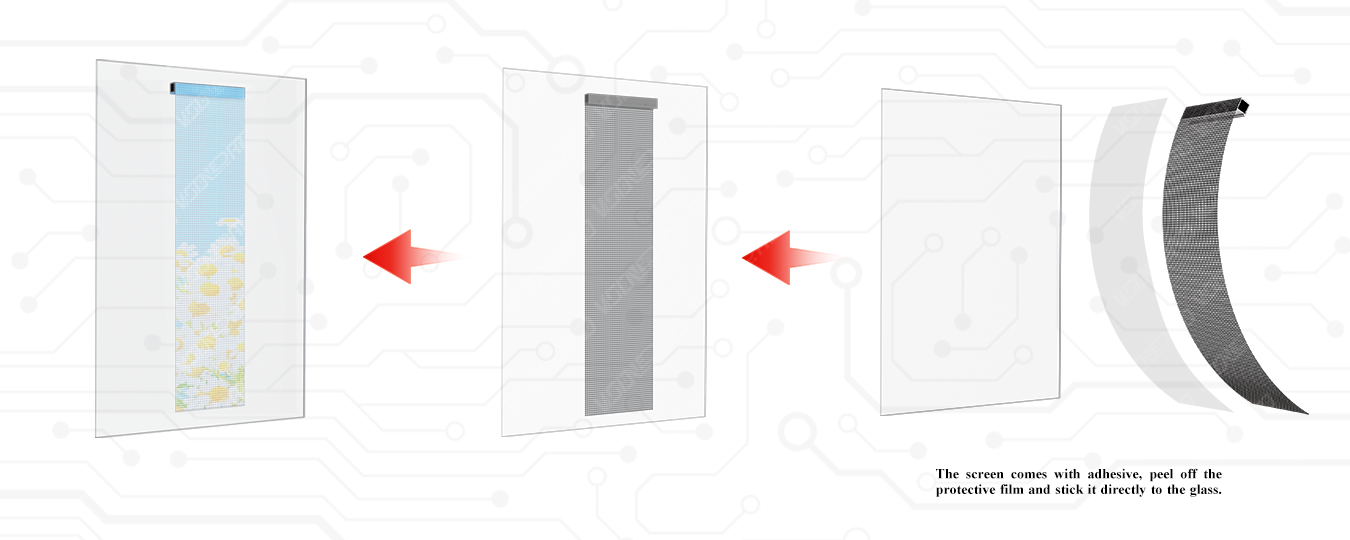
A: The screens are lightweight and highly versatile. They can be suspended from a top hanging beam or floor-mounted directly against the glass frame. These methods require minimal structural modification and preserve the integrity of the existing architecture.
A: The effect is permanent as long as the content is correctly produced. Our team provides guidelines on how to optimize your video files for the best 3D results.



 Tel: +86-134 2792 1400
 Email: led@visionledpro.com

Address: Second Industrial Park,No. 28, Xintang Road, Fuhai Street, Baoan District, Shenzhen,CHINA
Copyright © 2020 Shenzhen Vision Pro Electronic Co., Ltd All rights reserved.

By continuing to use the site you agree to our privacy policy Terms and Conditions.