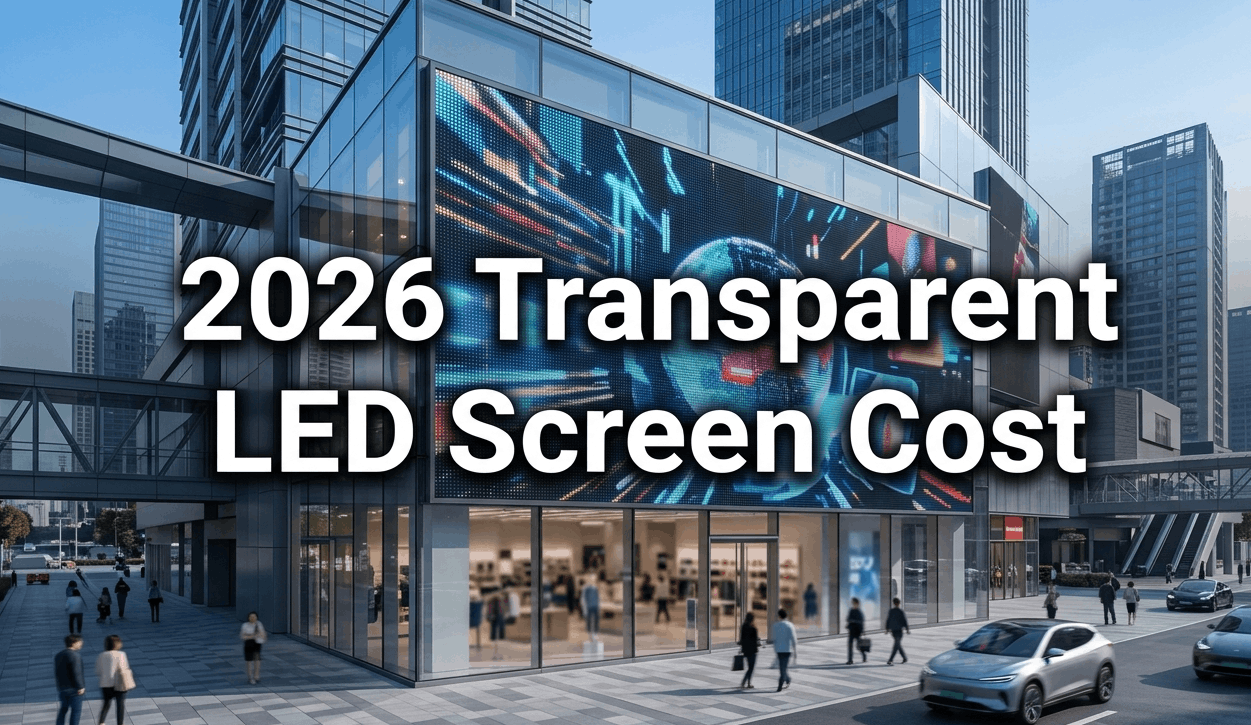
In the modern commercial landscape, Transparent LED Screens and 3D Holographic Displays have evolved from luxury novelties into essential high-performance marketing tools. However, for most B2B buyers, the primary challenge remains the significant price variance in the market. Quotes can range from $600 to over $4,000 per square meter.
Why is there such a massive gap? This 2026 guide by VisionLedPro breaks down the costs and explores the quality factors that determine long-term ROI.
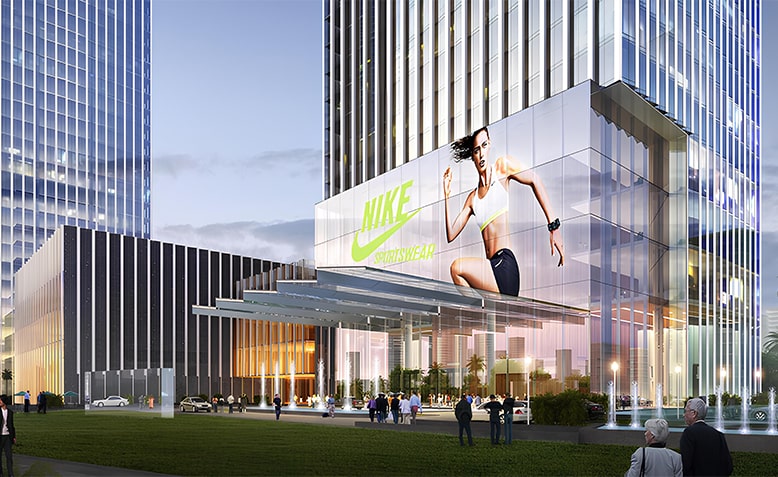
Before evaluating price, it is critical to understand the specific technology you are purchasing. Transparency is a result of structural engineering, and different methods carry different costs.
This technology uses traditional SMD LEDs mounted on a hollow PCB. It is the most cost-effective solution for massive architectural facades where a transparency of 60%–75% is sufficient for distant viewing.
By mounting LEDs on the side of the PCB strips, this method provides higher transparency (up to 85%) and superior brightness. It is the preferred choice for commercial retail windows that must combat direct sunlight.
Holographic 3D led screen is a specialized subtype of transparent display where VisionLedPro excels. With over 90% transparency and specialized 3D algorithms, it creates an immersive "floating" visual effect. This premium technology is designed for luxury branding and high-end showrooms where the display must remain nearly invisible when turned off.
To understand a quote, you must look at the technical specifications and the manufacturing environment behind the product.
Pixel pitch is the distance between the centers of two pixels. A P2.6 screen has a much higher pixel density than a P7.8. Smaller pitch requires more LED lamps per square meter, significantly increasing material costs and the complexity of the SMT (Surface Mount Technology) process.
In a high-quality display, the LED lamp beads and driver ICs account for approximately 60% of the total manufacturing cost.
The VisionLedPro Standard: We exclusively prioritize industry-leading LED brands like Nationstar, a global leader in RGB encapsulation. Using Tier-1 components ensures superior color consistency and prevents the rapid brightness decay common in non-branded alternatives.
Dust-Free SMT Workshop: Microscopic dust during production is the leading cause of "dead pixels." Vision Pro operates a strictly controlled cleanroom environment to ensure the highest reliability.
Automatic Screw Machines: Unlike hand-assembled units, our automated assembly ensures perfect module flatness. This eliminates the "dark lines" or structural warping that can ruin the seamless visual effect of a large transparent wall.
While every project at VisionLedPro is customized for the client, the 2026 market generally follows these price brackets for manufacturer-grade solutions. These figures represent the screen body cost.
| Series Category | Typical Pixel Pitch | Transparency | Estimated Price (USD/) | Primary Application |
|---|---|---|---|---|
| Standard Commercial | P3.9 - P10.4 | 65% - 75% | $800 – $1,500 | Shopping malls, atriums, large indoor ads. |
| High-Definition Window | P2.6 - P3.9 | 75% - 85% | $1,500 – $2,800 | Luxury retail windows, high-brightness street-facing glass. |
| Premium 3D Holographic | Customized | 90% - 95% | $1,800 – $4,000+ | Immersive high-end branding, 3D visual art, luxury showrooms. |
Disclaimer: The price ranges above are for reference only. Final project budgets must account for high-refresh-rate controllers, power systems, logistics, and any specific structural customizations. Contact our sales team for a formal quote based on your exact specifications.
A savvy buyer evaluates the Total Cost of Ownership (TCO) rather than just the initial purchase price. Quality engineering provides savings in three main areas.
VisionLedPro utilizes high-efficiency driver ICs that can reduce power consumption by up to 30%. For a 50 $m^2$ screen operating 12 hours a day, the annual savings in electricity can reach thousands of dollars.
Cheap screens often suffer from flickering and pixel failure within the first year. By using automated manufacturing and premium LEDs, our products ensure maximum uptime, protecting your brand's image and reducing the cost of emergency repairs.
Traditional LED displays require heavy steel frames. Vision Pro’s lightweight designs (often under 12kg/$m^2$) can be attached directly to glass curtain walls. This eliminates the need for expensive structural reinforcement, saving you significant labor and material costs.
Yes. Curved or irregular shapes require flexible PCBs and specialized frames. This customization typically adds a 15%–25% premium over standard flat displays due to the unique engineering involved.
Absolutely. Outdoor-facing screens require high-brightness LEDs (5000+ nits) and enhanced UV protection to remain visible in daylight. These specialized components usually increase the price by 20% compared to standard indoor models.
Beyond the screen body, buyers should factor in the LED control system, power/signal cables, shipping, and local import taxes. Generally, accessories and logistics account for an additional 10%–20% of the screen cost.
The most effective transparent LED screen is the one that balances viewing distance, ambient light, and budget goals. At Shenzhen Vision Pro Electronic Co., Ltd, we don't just provide a quote—we provide a solution.
Our team, including manufacturing engineer Rocky and R&D specialist Bruce, provides a full technical diagnosis for every inquiry. With 10 million RMB in registered capital and a full suite of global certifications (CE, RoHS, TUV), your investment is secure with us.
Contact VisionLedPro today for a tailored proposal and define the future of your vision.



 Tel: +86-134 2792 1400
 Email: led@visionledpro.com

Address: Second Industrial Park,No. 28, Xintang Road, Fuhai Street, Baoan District, Shenzhen,CHINA
Copyright © 2020 Shenzhen Vision Pro Electronic Co., Ltd All rights reserved.

By continuing to use the site you agree to our privacy policy Terms and Conditions.